Why Do I Need Both Endpoint Detection and Response and Antivirus Software?
Imagine if your organization had a security team guarding your building. You might have a security guard checking badges at the entrance, ensuring only those allowed to enter get in. But you also might have security personnel monitoring cameras to track suspicious behavior.
In this hypothetical, traditional antivirus software is the guard checking badges (known threats) and endpoint detection and response (EDR) is the rest of the team monitoring for suspicious behavior (unknown threats).
EDR and antivirus software are not meant to replace one another. They work together to offer comprehensive security.
Let’s examine the key differences between antivirus software and EDR.
EDR is an essential tool for any organization, as no target — regardless of size — is off-limits. In fact, many attackers target small businesses because they often lack proper security systems.
Key Differences Between Antivirus and EDR
Antivirus Software
Traditional antivirus software has been around for decades. Much like a bouncer keeps underage patrons out of a club, antivirus software scans your computer to keep malware off it.
However, antivirus can only stop known threats. New threats will slip by undetected, just as a patron with a fake ID can trick an unaware bouncer.
Antivirus software used to be enough to stay protected, but today’s attacks are far more advanced. Variants of known threats can slip by antivirus software, leaving your computers exposed.
Endpoint Detection and Response
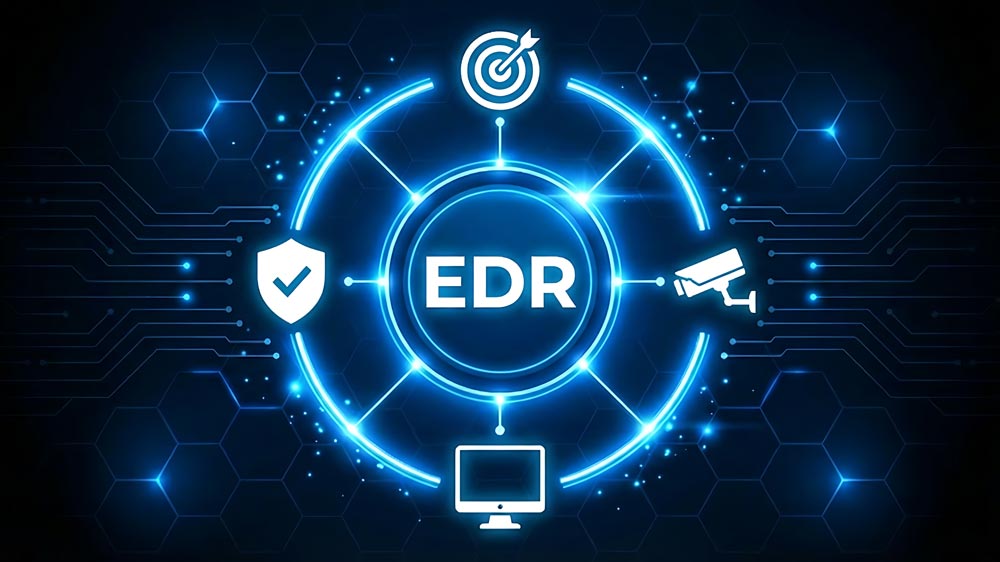
EDR constantly scans your device for unusual behavior that could pose a threat. It’s designed to contain threats that get by antivirus software.
EDR uses AI and machine learning to help an IT team or managed service provider detect and remediate threats before they can spread to other parts of your network.
It’s an extra layer of security to protect against constantly evolving attacks.
Here’s a table that breaks down the key differences.
| Feature | Antivirus Software | EDR |
| Detection | Known threats | Unknown and advanced threats |
| Response | Quarantines/deletes files | Isolates endpoints, contains damage and rolls back changes |
| Visibility | Limited | Full system activity visibility |
| Threat Hunting | No | Yes |
| Zero-day Attacks | No protection | Some protection |
Why Antivirus Isn’t Enough
Antivirus software isn’t designed to stop these advanced attacks. Here’s why antivirus alone isn’t enough:
- Zero-day vulnerabilities: Zero-day exploits are unknown, and antivirus software can only stop known attacks.
- Fileless malware attacks: Threat actors use legitimate, existing tools on a device to execute a cyberattack, rather than malicious files. Antivirus only detects malicious files.
- Lateral movement: Once inside, attackers move around undetected, escalating privileges and deploying ransomware across your organization. Antivirus doesn’t track lateral movement.
Protect Your Organization’s Devices
EDR is an essential tool for any organization, as no target — regardless of size — is off-limits. In fact, many attackers target small businesses because they often lack proper security systems.
Let’s secure your business before the next threat hits. Don’t wait until a data breach or cyberattack to improve your organization’s security posture. Contact us today to schedule a consultation.
Stay updated! Get tips and insights delivered to your inbox weekly by subscribing to our newsletter.